Marcus asks Hannah out and touches her at Rosie’s
Thirteen Reasons WhyMarcus asks Hannah out as part of a Valentine’s Day fundraiser, then touches her without consent at Rosie’s Diner. The date’s shift from awkward uncertainty to deliberate confinement and unwanted contact makes it a defining scene in Hannah’s account of how public rumor, isolation, and bystander inaction compound harm.
The invitation and the wait
While Hannah is at work, Marcus calls and tells her she is his number one on a list. He does not explain what list he means, and his answer gives the exchange a teasing, flirtatious ambiguity. Seeing Marcus outside the office window, Hannah recognizes the caller. The cheerleader beside her reacts with excitement, and Hannah plays up the moment for her, later acknowledging that without this audience she might not have agreed so quickly.
When Marcus proposes Rosie’s for ice cream, Hannah accepts. The date is connected to a fundraiser for Cheer Camp, a circumstance that later sharpens her anger: she believes he could have declined to treat the invitation as serious rather than ask her out and fail to appear. At the diner, she waits alone for thirty minutes, long enough to finish her milkshake and wonder whether Marcus has forgotten or whether he had ever meant the invitation.
Marcus eventually arrives and apologizes. He says he was not sure Hannah would be there and had initially thought their exchange was a joke; on his way home, he reconsidered and turned around to check. Hannah does not hold the misunderstanding itself against him. In her account, the act of coming back “just in case” is precisely what makes the later betrayal feel personal: he has chosen to seek her out, but the apparent interest does not make her safe.
From a date to confinement
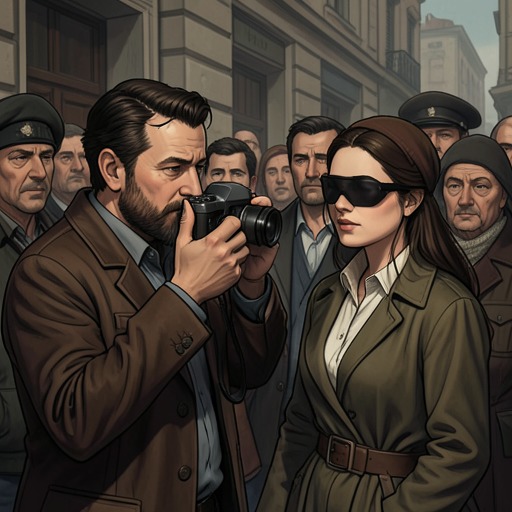
Marcus arrives with a plan that changes the conditions of the meeting. He moves Hannah from the counter to a booth near the back, by the pinball machines, and positions her on the inside, between himself and a wall. The spatial arrangement leaves her boxed in rather than seated freely beside him. The date’s ordinary setting—a diner associated with food and a Valentine’s invitation—becomes the backdrop to a rapid shift in power.
Marcus puts his hand on Hannah’s knee. She says that touch is when she understands what is happening, and compares its suddenness to being grabbed at the liquor store. She stops laughing and nearly stops breathing, but initially keeps her forehead against his shoulder. When she asks what he is doing, he asks whether she wants him to move his hand. Hannah’s account stresses the gap between that question and what follows: the touch continues and progresses rather than ending with her alarm.
She does not immediately move away. In the booth, Marcus’s fingertips travel from her knee upward; he draws her close with an arm behind her back and touches her upper thigh with his other hand. Hannah looks over the back of the booth toward other customers, hoping to catch someone’s eye. Some people glance toward them, but turn away. Under the table, she struggles to pry his fingers off and push him away. Her eyes plead for help, although she does not yet want to yell.
Resistance and the witnesses who turn away
Hannah tells Marcus to stop twice. She emphasizes that he is close enough to hear: with her looking over the backrest, her mouth is only inches from his ear. His reassurance does not end the encounter. Instead, as she describes it, his hand slides farther up her thigh. Hannah then rams both hands into his side and throws him to the floor.
The fall could look like a comic mishap to anyone who did not understand what was happening. Hannah rejects that easy reading: the other people in the diner have seen enough to know that something is wrong, yet nobody asks whether there is a problem or intervenes. Their silence makes the booth’s physical enclosure part of a wider social failure. Hannah’s attempted resistance is visible, but visibility alone does not produce assistance.
The episode also resonates with the earlier sexual harassment Hannah experienced at Blue Spot Liquor. At the diner, she explicitly recalls the suddenness of being grabbed in the store as Marcus’s hand lands on her knee. The parallel does not make the episodes identical; it shows how an earlier violation shapes her recognition of danger in a new encounter, while the surrounding people again fail to make her safe.
Aftermath and the wider pattern
On Hannah’s tapes, the encounter is told as a reversal in the meaning of Marcus’s invitation. The telephone call, the number-one claim, the cheerleader’s excitement, and the wait for an ice-cream date first invite the interpretation of an awkward romantic overture. Marcus’s decision to move Hannah to a booth and continue touching her after she objects displaces that interpretation. The date is no longer a matter of embarrassment or mixed signals; Hannah’s account centers the unwanted contact, her attempts to stop it, and his failure to stop.
The diner scene also belongs to a broader pattern in which Hannah is made vulnerable by other people’s actions and by the responses—or silence—of those around her. She has already been marked by a sexualized reputation, and she invokes that reputation while explaining why Marcus’s decision to turn back matters to her. At Rosie’s, strangers can see her looking over the booth and struggling under the table, but they do not step in. The event thus links reputation and isolation to a concrete circumstance: even in a public place, Hannah can be trapped in plain sight.
Later portions of the novel return to the difficulty of naming, interpreting, and responding to sexual harm. Hannah recalls stopping Clay when a moment between them begins to echo an earlier unwanted experience; she describes another assault in which she turns her head, clenches her teeth, and fights tears without saying no or pushing the other person away. In a later conversation with Mr. Porter, she says she does not know whether what happened at a party could be considered rape, and he presents confronting the boy or moving on as possible options. These episodes are distinct from Marcus’s conduct at Rosie’s, but together they show why Hannah’s account of the diner gives weight to her explicit words, physical resistance, and appeal for help rather than to a simplistic test of whether she used one particular phrase.
Marcus’s arrival after the thirty-minute wait could have completed the scene as a small story of an uncertain date rescued at the last moment. Instead, his return leads into a setting he controls, and Hannah’s attempts to resist end with him on the floor while the witnesses remain silent. What lasts is not a romantic misunderstanding resolved by an apology, but the contrast between a public room and the absence of public help.